If someone asked me to choose one thing in the world that I like to do more than anything it would be traveling. Most of the time, I travel alone, but I am not always alone. Sometimes I am hardly ever alone. Spending time with locals is a gift that gives you a close and personal view of the culture. Living with locals gives you an opportunity to be a part of a family. Meeting other travelers can give you lifelong friendships that develop over very short periods of time. This blog serves to share advice to other dreamers and travelers, particularly to women heading out to a faraway place for the first time. The one thing I can say to all of you is: get out there, wander the earth and wonder what the next turn in the road brings. An adventure awaits you.

Thursday, October 27, 2011

Bob Barker, come on down!

When I was in Guatemala, I saw more street dogs than you can shake a rawhide chew stick at. It is possible that some were “pets,” but some people let their pets roam free, so it was hard to distinguish the street dog from the family pet. I know many people would say there are more pressing issues to tackle in Latin America. But I think Bob Barker could do a world of good in the “get your pets spayed and neutered” campaign down there. I’m just saying there were lots of stray dogs. And they needed some love. And some soap and water.

Here is a photo collection I simply call “Sleepy Dogs in Guatemala.” (And I am sorry, but I cannot format a photo layout worth dog doo on Blogger. They sure don't make it simple.)


 I just wanted to take them all home! 

Have any of you read or heard of the children’s book called Walter the Farting Dog? Well, if you haven’t, it is quite amusing. The artwork is cool, too. And I swear the dog in the photo below is Walter. Looks just like him. Although this dog is female. And quite possibly pregnant. She is a pathetic looking thing, and I think she knew it because she was avoiding my camera like a flea bath. She kept trotting away from me and was all, “I don’t think so, lady. No photos today.” She needed some serious TLC, poor thing.


 This is a family dog that lived in my host house. Her name is La Baby. Cute as she is, she would not let me come near her. Which is weird, because I am a total animal person and I have always been sure that dogs could tell. Here in Austin, dogs follow me all the time. They get out of their fenced-in yards, see me taking a walk and just tag along (until I help them get home ... those stories are too numerous to recount here). But not La Baby. She was having none of that. I stayed in that house for three months and never once did she let me pet her. What is up with that?!   

I will leave you with the famous, oft-repeated quote from the host with the most: 
"Bob Barker reminding you to help control the pet population. Have your pet spayed or neutered. Bye-bye." 

And if you can't let sleeping dogs lie, adopt one! If adopting a dog in a foreign country is not in your travel plans, there are many dogs in shelters at home that would love to be yours. 

Thursday, October 20, 2011

Time flies ... when you’re in Latin America.

When I was about to take my first, long-term trip to Latin America, someone who had been there many, many times advised that I just get rid of my watch. I always wore a watch – and this was before cell phones told us what time it was – so I thought about it, but kept my watch. But on the flight from the U.S. to Panamá, guess what! My watch stopped. I saw it as a sign: my friend was right. I was going to Latin America, where it was more laid back and relaxed, where time was a suggestion, not a demand. Watches?! I didn’t need no stinkin’ watches!

I know I could’ve found a watch battery, but I decided not to, since this was so obviously a sign for me to get into the Latin American groove. The sense of time in Latin America is much more “loose” than it is in the United States. My gosh, people get uptight about punctuality here. If you are to meet someone at 9:00, you sure better be there at 9:00. And I was once working for a job training program where an instructor told the class, “If you’re on time, you’re late.” This is not true in Latin America, where if you’re on time, you are often early. Sometimes very early. 

This is true for parties, too, so be very aware. If you are lucky enough to be invited to a local party and they tell you it starts at 8:00, that really means that is the time they are going to start getting ready. If you actually show up at that time, the hostess will be in the shower, the host will be out getting the beer, and you will be sitting there on the couch, looking like an idiot who has nothing better to do than sit on a couch. The party won’t really get started until about 10:00, and it won’t be at its peak until midnight or so. Be prepared to stay out until the wee hours of the morning. If you don’t stay, you will be the ultimate party pooper. 

This is not to say that nothing is ever on time or that people never show up when they say they will. It doesn’t mean that movies don’t start on time or that when someone is to pick you up at a certain time, they won’t show up until later. No. Punctuality exists, very much so for some people. I’m just saying that if someone isn’t punctual, or if something doesn’t start on time, people don’t have a cow over it. They don’t care. They just go with the flow. “Oh, s/he’s late. I’ll just sit here and read the paper then. Or I’ll talk to the taxi driver about last night's game. Or I’ll just wait and be alone with my thoughts.” I know, crazy. (I am sure many of these waiting people are very likely on their smart phones, texting, and making phone calls these days ... but I am also sure there is a high level of patience attached to those activities.)

So yes, I lived without my watch for quite a few months while I was in Panamá. I didn’t really need it. It's not like I didn’t ever know what time it was or that I never looked at a clock. I still used an alarm clock to get up in the morning. But I think I did pretty well trying to adapt to a new sense of time. It was definitely a learning experience. I didn’t really become a more laid-back person regarding time. But I definitely understand it in a different way when I’m down there.

Before I returned to the U.S., I decided I wanted to buy a new watch there in Panamá. Yes, they sold them there, despite this relaxed way of thinking about time. I went to a store in a mall and started looking at simple, waterproof, big, sport watches. Nothing fancy. I tried them on, and when the salesman found out I was looking for myself, he told me I couldn’t get a man’s watch because I was a woman. That irked me, even though I’m sure he just meant that it wouldn’t fit or look fashionable (right). I bought a watch, ready to tell time again with a simple flick of my wrist. The salesman just shrugged his shoulders in surrender, knowing there was no talking sense to me. 

I still have that watch. I still wear that watch. I have been through many bands, many batteries, and it keeps on ticking (but no, it’s not a Timex). I can’t really wear it in the water anymore because it gets steamed up. And the face is a bit scratched. But I still wear it for any sporty or outdoor activities. I love that watch. I love it because I got it in Panamá. I love it because it’s a man’s watch and I bought it even though a man told me I couldn’t. I love it because it’s simple as heck and still glows in the dark. I love it because I feel it keeps Latin American time. No, it doesn’t make me late. It doesn’t give me an excuse to be late. But I got it in Latin America, the same place where I developed a new sense of time, at least for a little while. I wear it when I’m in Latin America and have purchased bands and batteries in little, family owned jewelry stores in Caracas, Xela, and Oaxaca. I have worn it a lot more often in the U.S. and it was made in Japan, but to me, it is a Latin American watch, telling Latin American time.

Don’t get me wrong, I know plenty of non-Latin American people in the U.S. who are habitually late. And I know plenty of Latin Americans who are never late. But the difference is, the late habit in the U.S. is annoying many people: friends, family, bosses, coworkers. That wouldn’t be the case in Latin America. People would understand or just wouldn’t get upset about it. Time is just part of life, like humidity or a bunch of plantains. It is there, but why think about it? There are more important things to think about, like the fact that friends are getting together or there’s a party at your cousin’s house. Those things are much more thought-worthy than punctuality or tardiness. So just chill out. When you are traveling in Latin America, you might be wearing a watch, but it doesn’t mean anyone else is. 

Thursday, October 13, 2011

Age is just a number.

As I have written before in this blog, when you travel alone, you don’t have to stay alone if you don’t want to. Not for very long at least. In my travels over the years, I have often spent time with travelers younger than I. Many of the travelers I meet are in their “gap year” between high school and college. Or they’re taking a break from college. Or they have just finished college.

I have met travelers who were older than that – some who were just taking a vacation for a few weeks. Some were from Europe and had loads of vacation time so they could spend an awesome amount of time traveling. I met a German woman in Nicaragua who was taking a sabbatical from her job as a veterinarian to work in Guatemala for a year. I met a number of couples at various times traveling for a year or more through Central and South America. I’ve met retired people, taking advantage of their freedom to learn a new language and see new places.

During the first few weeks of my stay in Guatemala, I hadn’t met anyone to “hang out with” of any age. I just didn’t connect with any of our volunteers or students and I wasn’t meeting people yet. At the time, I thought it was because most of the people were just too young. And in essence, they were. Sometimes the age gap is more noticeable for whatever reasons. I just couldn’t really relate to these kids. 

One friend I did eventually meet was Brian, a guy from the U.S. who was traveling for a while, trying to pick up some Spanish skills, and volunteering at a bike shop. Brian was younger than I, and we got into this discussion about Generation X. I am a Gen Xer and I would’ve loved to meet more Gen Xers from any country, because I could not relate to these young travelers I was meeting, nor they to me it seemed. Brian swore he was also a Gen Xer, although that wasn’t really important because he was cool. But we did some internet research and sure enough, he just made the cut-off year ... a fellow Gen Xer at last.

For those of you who have no idea what I’m talking about, Generation X includes those who were born between 1964 and 1980, more or less, depending on the source. So it still encompasses a pretty wide range of ages, but you have a lot of the same cultural references and influences, such as the fall of the Berlin wall, the Space Shuttle disaster, grunge music, and the AIDS epidemic. (But I bet the youngest of the generation may not fare as well in a trivia contest.)

Brian was a fun friend, but he was also hanging out with a lot of younger, shall we say “more clueless,” youngsters, even younger than he was. He had a similar Gen X conversation with some of them, knowing that they were not from that generation. He told them the general birth years of a Gen Xer, and to that they replied “Huh uhn, those aren’t Gen Xers! Those are Baby Boomers!” 

Yikes.

But the truth is, the age of a person does not necessarily signify anything. Most travelers I have met over the years are younger than I am, and as I get older, this becomes even more likely and the age gap even greater. I have met some awesome people who I would probably never hang out with otherwise, just because in every day, non-traveling circumstances, our paths would probably not cross because of where we are in life (9-5 job vs. college) or the countries we live in.

Ronja, my then-20-year-old friend from Denmark, was a great travel companion in Guatemala. She was smart, read interesting books (she had just finished To Kill A Mockingbird and claimed it was her favorite book ever), was fairly obsessed with Roger Waters, and was adventurous. We had fun traveling to northeastern Guatemala, including an amazing trip to the Mayan ruins of Tikal. Our other travel buddy was Evelyn, the 19-year-old niece of a Guatemalan friend in the U.S. who lived fairly close to Flores and Tikal. We had a great time, even spent a few days on a ranch where we rode horses (Evelyn and Ronja for the first time) and played ping pong (Evelyn for the first time). Did they treat me like their mom? No. Did I treat them like ignorant children? No. Did I stay out as late as they did? No. But we did have fun.
Here are Ronja (front) and Evelyn (back)
horseback riding at Finca Ixobel, just south
of Poptún, Guatemala. 
When I was still in Xela, I did finally meet a Gen Xer who was closer to my age. He was from San Francisco and he made a reference to the old game show, Match Game ’77. I was so excited to meet someone who actually remembered Gene Rayburn saying things like “Alice went to the dentist because she had a tooth ache. After her exam the dentist told her, ‘I’m sorry to inform you that I am going to have to      blank     your tooth.” (Here’s a video clip from that long-ago show to jog your memory). We even high-fived in generational solidarity. But despite that small connection, that was all there was. I didn’t hang out and talk with him over beer or hot chocolate, like I did with Ronja and Evelyn. I didn’t cross the country in a bus with him like I did with Ronja. I didn’t wake up at 3 a.m. to get to a sunrise tour of Tikal with him like I did with Ronja and Evelyn.  

Here I am with Evelyn (left) and Ronja (right) in the town of Flores,
Guatemala, near Tikal. I am sure my young friends had no idea who
the heck the Partridge Family was (see my t-shirt, center).
Come on get happy!
Sure, it’s sometimes nice to hang out with people who understand where you come from, not just geographically, but historically. I have met awesome people from the U.S. when I travel.  I have met some great people who are my age. But I love meeting people from other countries. And age really is just a number. Sometimes it accurately depicts a person’s knowledge base/experience (“ ... those are Baby Boomers!”). But sometimes it camouflages the maturity and intellect of a younger person. Don’t think you’re too old to hang out with 20-somethings if you’re not one yourself.  When you travel, you might be surprised at who becomes a friend. In the end, the memory of a game show from the 1970s is probably not an important connection. Many of the people you will meet as you travel were not even born then. Maybe you weren’t even born then. No matter what your age, just have fun with those you meet on the road ... whether you or they know who Gene Rayburn is or not.

Thursday, September 29, 2011

Good to the last drop.

Today was National Coffee Day in the United States. Oh, didn't you hear? Yeah. National Coffee Day. I don’t know where this came from or when it started. But evidently you can get free coffee in some places in celebration. Sorry if you missed out on that. Mark it on your calendar for next year.

I no longer drink coffee very often. But that does not mean I don’t love it. Because I do. I love coffee. I love the smell of beans when you open a bag, or of the grounds when you open a can, of its liquid form as it steams in a cup. I love the taste of a nice, hot, cup of coffee, undiluted by sugar or cream. I also love the fancy coffee drinks, with sugar, milk, steamed milk, frothy milk. I love coffee flavored ice cream, coffee cake, and chocolate covered coffee beans. I love it all. Coffee rocks! Except for that heart palpitation thing I get from the caffeine, hence the not drinking it very often. 

Imagine how fun it is to go to a region where coffee is grown in great quantities, like Latin America. You can go to a coffee farm, see how it is grown, see how the beans are picked and dried in the sun. After such tours, you can purchase coffee grown right in the place you just saw. They even give you a sample to drink after the tour.
Coffee beans, right off the plant.
Coffee beans, drying in the sun.  
The interesting thing about this is that even though all that coffee is grown in the region, and even though I saw fields of the stuff growing on beautiful hills or growing within a forest, many (if not most) of the local people I met drank (gasp!) instant coffee (gasp again!). I’m not sure why. Maybe it is too expensive, or the majority of it is exported. But Nescafé is very popular. I personally don’t have any issue with instant coffee. If that is what my host family drank, then that is what I drank. It’s not the greatest form of coffee, true, but I am not much of a coffee snob. So I don’t mind. Again I bring up the old adage: when in Rome ...

This is not to say that you can’t get awesome brewed coffee in Latin America.  Because oh, you can. My first trip to Latin America was to Costa Rica. We had breakfast every morning in our hotel’s little café. I am sure we ate eggs and gallo pinto (rice and beans mixed together), maybe some toast. But what really sticks out in my memory is the coffee. It was steee-rong. It was rich and delicious. They served it with hot milk. I couldn’t have loved it more.

Venezuela is also an exception. I think I mostly drank hair-curling-strong espresso while I was there. But they just called it "coffee." My friend Ana Maria's family drank it often, brewing it up in a little aluminum cafetera (screw-together stove-top coffee percolator) and serving it in tiny cups. It was fantastic, strong as it was. I bought one of those cafeteras and a cute tiny cup set to take home. Coffee was a big part of that trip. I also had it in the afternoons, when my friend was still at work and I would wander off to the Museum of Fine Arts. I would get one of those tiny yet potent coffees in the museum cafe, and enjoy it with a piece of cake, torta tres leches to be exact. Delicious afternoon pick-me-up! 

Before giving up caffeine (or at least most of it), I also enjoyed fabulous cappuccinos in Panama City. Every restaurant I went to had one of those fancy cappuccino machines and every restaurant knew how to make it well. I also enjoyed delicious cappuccinos every afternoon after my Spanish classes in Quito. Also perfectly made. At least to me. Like I said, I’m not a coffee snob and don’t mind instant coffee, so maybe my bar isn’t as high as yours. But I just want you to be aware that there is non-instant coffee goodness available as well.

In Guatemala, at my host family’s house, they would always have hot water available, and I could have a cup of hot tea or coffee. Even though I didn’t mind instant coffee, I was off coffee at this point. But every once in while, I needed something other than amazing Guatemalan hot chocolate (mentioned in this post). And luckily there were plenty of cafes that served the freshly made, strong, robust coffee I love so much. In Xela, my favorite cup of coffee was at Café Baviera (Zona I, although I hear the outside seating at the Zona 3 location is very nice). 

I also recommend buying some local coffee for gifts to take home. You may find such coffee, wrapped up in cute, colorful packages at a coffee farm you tour. But I suggest going to a local supermarket and buying it there (unless you are touring a coffee cooperative where sale of the coffee helps support the local community). Even though the local folks I have known don’t drink it themselves, it is available in stores and costs less than at a farm (and you may not get to a farm). It may be more expensive than Nescafé, but I can promise it will be a lot cheaper than a bag from Starbuck’s.

So yes, if you stay with a local family when you are in Latin America, there is a chance your morning coffee will be instant, even though fields of coffee are mere miles away. But do as the locals, enjoy it, and soon enough you will be accustomed to that, and maybe even enjoy it when you get home. Just be reassured that when you are in desperate need of a "real" cup of joe, you will be able to find it. And it may just be unforgettable. 

Thursday, September 22, 2011

A horse of a different color.

When you are traveling in another country, far away from what is normal for you, you may take on a more adventurous attitude than you usually have. You may feel compelled to try new things, things that you would never do at home, or things you would never have the opportunity to do at home. And you should do them. New experiences are what travel is all about.

Why not try this food? Why not eat this fruit I’ve never heard of? Why not travel in the back of a pick-up truck? Why not climb down to this cenote on this rickety old ladder that has obviously not been inspected by a government safety department of some kind? One time, I asked myself, “Why not get painted blue by the locals in an indigenous village in the middle of the Panamanian rainforest?” I mean, really. Why not?

One of my first trips to Latin America was to Panama, with some former coworkers who were doing research in the rainforest. We were going to the Darién Province, which borders Colombia and is the least developed part of the country. It is home to the Emberá (or Chocó) Indians, and an abundance of flora and fauna. And that's about all. To get there, we flew in a small plane from Panama City. It fit the seven of us and the pilot. They had to know our weight to know how to distribute us in the plane, for maximum safety or something. So, for whatever reason, I was put directly next to the pilot. In the front of the plane. Like a copilot, only without an ounce of knowledge about how to fly the plane or copilot the plane or anything regarding the plane except how to sit in it and buckle my seatbelt.

I was a bit nervous at first, but it was pretty hot in the plane, and the others in back did not have a view of anything outside. They only had the motion of flying, heat, and a lack of air. You know what that means – some of my travel companions were tossing their cookies while I just looked out the front window. I had no idea what was going on back there. Luckily the engine was pretty loud.

We landed on a dirt airstrip, and that is when the men from the photo in this blog entry carried our bags down to the river. At the river, we set up transport with some men who took us to our destination in dugout canoes with outboard motors. This canoe trip took a few hours up the Tuira River. We saw tiny villages on the shores of the river and children ran out to wave to us. We were on a river, in a rainforest. And there was so much to take in. It was beautiful and amazing.

We spent the next several days in a village on the shores of the river, visiting families and learning about their lives, seeing (and buying) their handmade baskets and other crafts, hiking through the rainforest studying plants and learning about the many creatures living there. We stayed in a “guest hut,” slept on the floor under mosquito netting, bathed in the river. For a couple hours at night, the generator would produce enough electricity for some lights. This was a rather new development for the village at the time. Light bulbs were a new technology. This short period of time with electricity allowed a little cantina to open for a while each evening, and for my friend Ande and I to go grab a cold beer. Well, it was a beer at least.
This is the hut on the hill, where we stayed.
  
The Emberá women, for special occasions, paint themselves with an indigo dye that is made from a local tree berry. They are painted in beautiful, geometric designs from chin to toe. On their beautiful, dark skin, these designs were amazing. We were intrigued. So Ande, our friend Sandy, and I asked if we could also be painted. “When in Rome...” we thought.

So one afternoon, we were painted. The local women sometimes wore shirts and sometimes they didn’t. When they got painted, they did not wear shirts. And since our entire torsos would be void of any design if we didn’t, we decided to completely do as the locals did and bare it all. I know we Americans are a little prudish when it comes to that. Topless beaches are not the norm in the U.S., so we are just not accustomed to letting it all hang out as it were. But on that day, we did. It was quite liberating. I mean no one cared except us. I think the bigger interest was in how white we were.

My friend Ande is a red head, and she has lovely, porcelain skin. To say I have porcelain skin is a stretch. Pasty is a little too negative. Milky white? Still no. How about pale? Yes, I am pretty pale. And although able to achieve a tan, I can burn but good. Which I did, on the way to the village in the dugout canoe. I was relaxing in the boat, letting my hands drag in the water, and the lack of sunscreen and reflection off the water caused the tops of my hands and forearms to basically fry. So they were rather red when the woman was painting us. She wanted to know what was wrong with me, that is how strange it looked to her. When I was painted, I was a lovely red, white and blue – the colors of both the U.S. and Panamanian flags. 
Here I am, right after the paint job.
Oh, but I didn’t know how blue I really was until the next morning. I woke up, under the mosquito netting, and one of my hands was in front of my face. Yes, it had been blue the day before. I would say a light, rather transparent coating of blue dye. But that morning, I was shocked to see how much it had darkened. We looked like the Na’vi in Avatar, only a darker blue (although I didn’t have that reference back then). It went from our feet up to our chins, just like the local women. “How long would it last?” we asked. “A few weeks,” we were told.  Ahhh, a few weeks. Super!
Now you see what I mean when I say "blue." Yeah, it darkened up a bit.
This is Ande (right) and me, with some of the girls from the village as
they performed a traditional dance around us. You can see they were also
painted, but with different results.  
But we honestly did not care that it was so dark and would last for so long. It was cool! It was a beautiful work of art on our bodies. We had full body tattoos, without the pain or permanence. It looked totally different on our white skin, this is true; I thought it looked much better on Emberá skin than on mine. But it was amazing that they had done that for us. Yes, we paid for it (not much), but they didn’t have to share that tradition with complete strangers. But they did. And it was as much fun as it was liberating. 

Since it was so hot and humid in the rainforest, and since we were often in the river cooling off, most of the dye on our faces had faded by the time we were to return home. But it was about six weeks before every bit of dye had disappeared from my body. The last place was on my back, right where the arm attaches. (Do I not wash there as much or what?) I was kind of sad to see the last of it go.

So you see, sometimes stepping out of your usual comfort zone is worth it. Taking that leap – even out of the comfort of your t-shirt – is sometimes worth the risk. I am not encouraging you to do stupid things while you are traveling. But there will be chances you get as you travel that will not come by you again. You will see things you will never see again. You will have the opportunity to participate in once-in-a-lifetime events. So to that I say “Yes, do it. Throw caution to the wind.” It makes travel that much more memorable. And you won’t be blue for missing a great experience.

Thursday, September 8, 2011

How to have sweet dreams in a not-so-sweet bed.

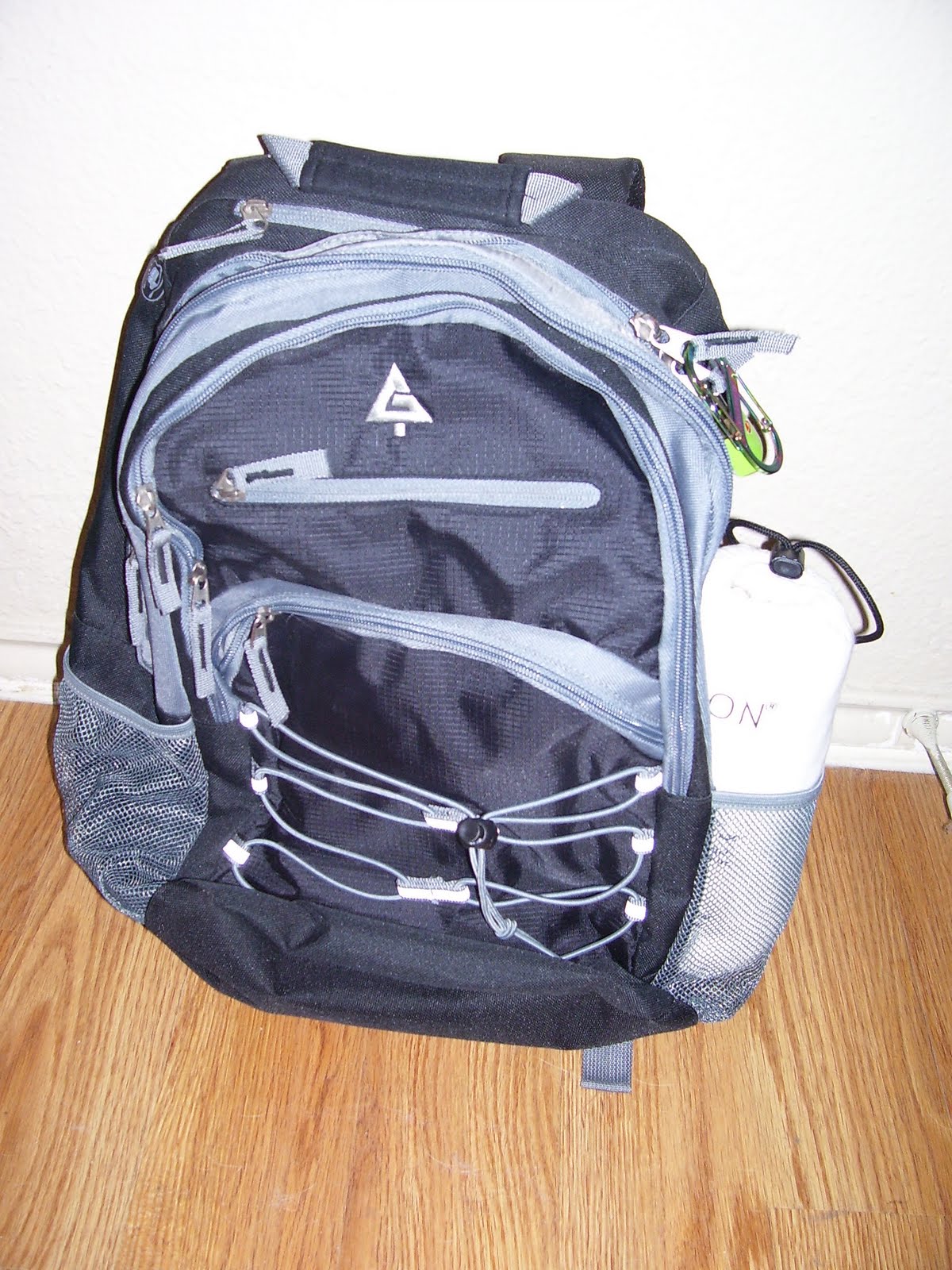
I recently wrote about luggage and backpacks. Today I am going to discuss a different kind of bag that you might find useful in your travels, especially if you are not in the habit of staying in five-star hotels with freshly laundered 1500 thread count Egyptian cotton sheets. The bag I refer to is actually a sleep sack (or bag liner or travel sheet). As a traveler who has stayed in some not-so-nice digs, I can say that this is a very good thing to bring with you. Maybe I am just picky – I mean I do think I have a particularly high aversion to funky sheets. I would prefer to sleep on the ground, in the actual dirt to be very honest, than on sheets that have been sweat upon (or worse) by a stranger. But I think most people prefer clean linens, especially you ladies out there.

Here is my sleep sack, in its bag.
It says, "for Youth Hostels
or as a Sleeping Bag Liner with
pocket for pillow." 
After I graduated from college, I took a whirlwind trip around Europe with some other college students and a couple of professors. The itinerary was planned by a college in the U.S. and our accommodations varied from country to country. We stayed in a bare bones hostel with bunk beds in Amsterdam, and a lovely boutique hotel in Munich with fluffy duvets. We never knew what we were going to get. The hostel we stayed at in Paris was a unique building, very gothic looking if I remember correctly. Our room was fairly huge, with very high ceilings, and even had stairs leading up to another level. Although unique, it certainly wasn’t fancy. And the human hairball I found in the bed, on the not-clean sheets really grossed me out. I ended up sleeping on my coat, curled up like an uncomfortable cat for the three nights we were there. Even at 23 years of age, that was not good for my back.

Years later, traveling through Panama with my boyfriend at the time, we also came across some interesting accommodations. One place in particular was a pension and the rooms were behind a little cafe that seemed to be stuck in the 1950s ... and not in a charming way. In a creepy, forgotten, Twilight Zone way. As we walked through the building to get to our room in back, we passed elderly people who seemed to be wandering around aimlessly, but more like zombies than cute senior citizens. It was weird, okay? So we were a little disturbed with all of that. And then our bed was so obviously not freshly made with nice, clean sheets, which bothered my boyfriend as much as it did me. Luckily, I had brought a sheet, and I think he had, too. So we managed to find a way to sleep on a not-so-clean bed.

You can see how compact this
particular sleep sack is. It even
fits in the water bottle side
pocket of a daypack.
I know there are tough, strong, resilient travelers out there who can sleep wherever, and endure whatever conditions they encounter. They don’t care about dirty anything. (In my experience, most of these people are young men, who also think bad body odor and public flatulence are perfectly fine; the guys who say things like, “Hey dude, I can’t even afford this tortilla, man. And you expect me to buy a bar of soap? Yo, I’m not rich, man.”) So kudos to them.

But even though there are a lot of things I can put up with on the road, nasty bed sheets are not one of them. So recently I found a sleep sack, which doesn’t take up much room in a pack or suitcase, but can be used to guard one from such unappealing circumstances. It is basically a light-weight sleeping bag. You can also use it as a liner in your sleeping bag, giving you a little added warmth. In warm climates, it can be used alone. Mine is sewn along one side and has velcro openings on the other side, where you can get into it. It also has a pocket where you can put a pillow, should you want that to be covered as well. If you’re handy/crafty, you can sew your own from a sheet or two. I used to carry a sheet (just a sheet, no sewing) wherever I went, just in case. That works just fine, but I like the sack that has some “closure” to it because I feel more protected. It is less likely that one of my feet is going to escape during the night, only to get tangled up in a hairball.

   That is so disgusting.

Anyway, I am suggesting this sleep sack/bag liner/travel sheet to those of you who need a good night’s sleep, but will not get one if you are potentially sleeping in a not-so-clean bed. I could get more descriptive about possible uncomfortable sleeping situations, perhaps stimulate your gag reflex in the process, but I will spare you. If you stay in nice, clean places all the time, then don’t worry about it. But if you think you might need a back-up plan, then this is the way to go. No sense losing sleep over dirty sheets.

Thursday, September 1, 2011

Lost in translation.

When you are traveling abroad-- alone or with someone-- getting from place to place requires some amount of communication with locals, either by speaking their language, speaking your language, using various hand movements, playing charades, drawing illustrations on toilet paper, whatever. But it is necessary. If you know the local language, all the better. If the local person to whom you are speaking knows English, you can be as lazy as you want about language acquisition. But sometimes, even when those two cases are true, something just gets lost in translation.

Here we are, enjoying a delicious late night snack with
our friends Mariann (white sweater) and Morten (standing, left)
and their family (my dad is standing, maroon sweatshirt; I am taking
the photo). Yes, it is really night, probably around 10:00, in August.
It was a memorable evening.
One of the few trips abroad I have taken that was not to Latin America was with my father a few years ago to Norway. This had been a dream of his for decades – to visit the place where his grandfather was born. The trip was pretty spectacular. I have good friends who live fairly close to Oslo, on a gorgeous farm that has been in their family for centuries. It was our “home base,” a central place where we could rest, plan and return to after traveling. Morten and Mariann were amazing hosts, entertaining us, feeding us delicious food, helping us with travel plans, and showing us around their beautiful town and surrounding area.  

Additionally, we were able to meet some distant relatives in Trondheim, probably third (or so) cousins. Not only did we meet them, but we stayed with them and spent a few days talking about our family tree, visiting distant family gravesites, traveling to the house my great-grandfather lived in before he left for the United States, and drinking Norwegian beer. So this was also an incredible part of our trip. It meant a lot to my dad to be able to do those things, and connect with his roots. It did to me, too.
My dad and I, standing in front of the house my great-grandfather
lived in near Trondheim before he came to the U.S.  It has been empty for years.
The last part of our trip, before we returned to Morten and Mariann’s farm and then home, was to the west coast of Norway, to the lovely city of Bergen. There we had no personal connections, no friends, no long lost relatives to visit. We just wandered the city, took the Fløibanen Funicular up the mountain, ate good food, listened to the street musicians perform, visited some great museums, and enjoyed really creamy ice cream. We also lucked out and had sunny days the whole time we were there, an unheard of occurrence in the rainiest city in Norway.

For the return trip to my friends’, we planned to take the train from Bergen to a town near their home. They had encouraged us to make a stop along the way and take the Flåm Railway down to the village of Flåm because it was a lovely trip, on an interesting and historic train (one of the steepest in the world) with beautiful views. We had already experienced the train system in Norway earlier in our stay. The trains were convenient, very modern, clean, technologically superior to those in the U.S., and a wonderful way to travel. One of the nice things about taking the train was we didn’t have to worry too much about where we were arriving or where to disembark. As we approached each station stop, the conductor would get on a loud speaker, announce the station – in several languages no less – and tell us on which side to disembark. Piece of krumkake.

Until it wasn’t. A piece of krumkake that is. For some reason, on that train ride from Bergen to Myrdal (where we would catch the Flåm Railway) the conductor didn’t do this, at least not at the stop we needed. So we thought we were at the right station, but we weren’t sure (until other passengers confirmed that we were indeed in Myrdal). Then, as we pulled to a stop, the conductor also failed to tell us which side we should exit on. And when the doors on the right were the only ones to open, on the side where there was no platform, what were we to do? We were standing there, with our luggage, and the only door to let us out was at least five feet off the ground, next to a gravel covered slope. This is where we were supposed to exit? We feared the train would pull away and we would miss our chance to see Flåm and the tunnels, and the waterfalls, and the fjord if we didn’t get off the train. So I told my dad, “We have to get out!” And then he threw his suitcase off the train, and jumped. He jumped down, landed on the gravel, fell down, and somehow managed to not roll down the hill. 

As soon as he did all this, the door on the other side slid open and there was the platform, on the side of the train facing the depot, level with where the rest of us were standing inside the train. Otherwise known as the correct door. What I remember is mild chaos and veiled panic on my part. However, my dad was quickly back on his feet, not hurt in any way, and someone helped him get his suitcase back on the train. Being six foot two inches made it possible for him to get back up into the train, with the aid of a strong Norwegian (as if there were any other kind).  We exited on the correct side, walking out onto the platform without having to jump. But I was very worried because my dad had just had both knees replaced the summer before. And he had just jumped off a train! I am sure I would’ve followed him had that door not opened in that instant, and I would not have fared as well since I do not have joints made of titanium.

At the Myrdal depot, as we were waiting for the Flåm train to arrive to take us down to the fjord, and after many “Dad, are you sure you're okays,” I decided to speak to someone. I went up to the window at the train depot, and spoke with the young, pleasant woman behind the counter, who, of course, knew English. I said, “Hi. I don’t know how you are here in Norway, but I’m from America and we like to complain.” And then I proceeded to tell her what had happened, and that the conductor had not said where we were, which side to disembark on, nor had he opened the correct doors at first. “See that old man over there? That’s my dad. He just had knee surgery last year, on both knees, and yes, his knees are new, but he is old. Look at him! And he jumped from a train. He jumped from a train! I just thought someone should know.” So I got that off my chest and felt the mishap was at least acknowledged since she confirmed that it was standard practice for the conductors to announce both the train station and which side to exit on. My dad really was fine. And the trip down to the fjord was beautiful. Now it is one of my dad’s favorite stories to tell people. Only I think he may tell people that I pushed him. But hopefully they know he is just embellishing for dramatic effect. 
Here I am standing in Flåm in front of the Aurlands fjord. Was this
view worth all the drama? Yawh, you betchya!
Another time when I was traveling with someone, we ran into Latin American friendliness that presented itself in the form of severe miscommunication. My friend Monica and I were in Oaxaca, Mexico and had planned a day trip to see the ruins at Monte Alban. We were told we could take a bus from some hotel that was located near the market. So we walked and walked to where we thought it was based on what we had seen on a map. But no hotel. So we asked a bus driver on a city bus, and he told us his bus would take us there. So we got on his bus, and ended up at some other market where the other bus should be. But no bus. And the city bus was gone. We then asked a taxi driver and he again referred to the hotel and pointed in the direction from where we had just come. We were sick of walking, and spending so much time searching, so we had him take us. And there were the buses for Monte Alban. At the hotel. But we wondered why the city bus driver had told us to go to the other market. It was totally incorrect information. It wasn’t even sort of correct. It was a complete detour. And I just don’t think a 5¢ bus fare would be enough inspiration to lead us on a wild goose chase. So I attributed it to the friendliness of the people. I had run into this before – people in Latin America are so friendly that they don’t want to tell you “I don’t know.” They don’t want to leave you without any information, so instead they guess and tell you something rather than nothing. Even if nothing would be way better.

The point is, whether you know the local language or not, whether they know your language or not, sometimes there is a lack of communication that can cause delays or problems. But you have to remember that this happens at home, too, in your own neighborhood, with your own friends and family. It’s just a human thing and doesn’t necessarily have to be chalked up to some kind of cultural difference or language barrier. It can be frustrating at the time. It can become stressful and worry you. But if you’re lucky, the experience will become a funny travel story you can share with others, maybe even for years to come.